
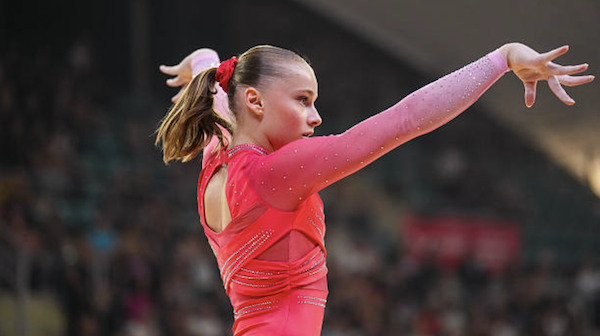
Elena Colas
As with all of the other continental championships competitions we’ve seen in 2026, this year’s European Championships will not only determine the best gymnasts in the region, but will also decide the teams and athletes that will be off to world championships in October.
The largest contingent of athletes will come from Euros, with a total of 13 teams and 25 all-arounders (two per country not qualified as a team) earning spots in tomorrow’s qualification round, which also serves as the all-around final as well as the qualifier for the team and apparatus finals held over the weekend.
A total of 29 nations are expected to field full teams to vie for those 13 team spots, and we’re excited to get into a deep dive looking at which nations we’re most likely to see make it to Rotterdam.
The senior competition at the European Championships begins tomorrow in Zagreb! For the complete athlete roster, full schedule, and information about how to watch, be sure to check out our coverage guide.
NO QUESTION
The Russians are back in a team competition at Euros for the first time since 2018, which seems unbelievable, but between missing 2020 due to COVID followed by a subsequent international ban due to the war in Ukraine, it’s true! Though they’re competing neutrally as “WG2” here per Croatia’s guidance, they’ll still be eligible to qualify a full team to world championships, where World Gymnastics is allowing them to compete under the Russian flag.
Led by Olympic champion Angelina Melnikova, the team features a strong mix of top all-arounders, and though there’s a hole on bars with Alyona Glotova going up in the spot that should’ve gone to Viktoria Listunova – whose visa was denied by the Croatian government earlier this week – they’re still capable of putting up three scores above a 14 on that apparatus, which could set them apart from the majority of the field combined with a relatively otherwise well-rounded program, making them a lock for worlds and the team to beat in the final.
Italy is without some of its stars here, with some younger and less-tested athletes on the roster, but they still boast two Olympic medalists with Manila Esposito back on beam and floor while Elisa Iorio will anchor bars. This year’s all-around national champion July Marano is also in the mix, along with silver medalist Giulia Perotti and bronze medalist Anthea Sisio, a first-year senior with just one major international competition under her belt. The talent is there, and while inexperience and inconsistency could hold them back from reaching the top of the podium, they’re still likely to be one of the best teams in Zagreb, and a worlds berth will be nearly guaranteed.
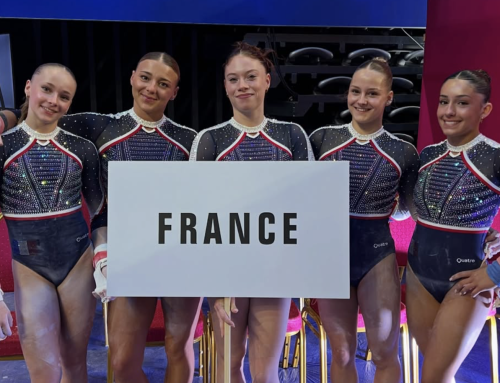
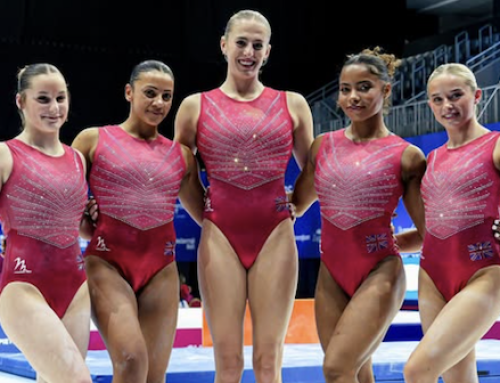
My other two picks for this category are Great Britain and France, with the British team sending three members of its 2024 Olympic team – including Becky Downie in her international return post-Paris – while France will see the first major international test for first-year senior Elena Colas, who could also be one of the biggest contenders for the all-around gold here. Both teams have balanced rosters overall, and like Russia and Italy, will be pushing for team medals in the final.
PRETTY LIKELY
While not quite at the levels of the top four on my list if all goes according to plan, I see the Netherlands, Germany, and Spain as almost certainly set for world championships berths.
The Netherlands has a fantastic group of Olympic veterans on hand to lead the team, including top all-arounder Naomi Visser, bars standout Sanna Veerman, and Olympic beam champion Sanne Wevers. Though they lack the overall difficulty compared to most other teams I’m envisioning making the team final, they generally put together solid performances in qualifications, and I can see them securing spots both in the final and at worlds.
I’m excited about the German team’s potential, especially now that Helen Kevric is back on bars and beam post-injury. This is a veteran-strong squad with so much experience, and even the youngest and least experienced member of the team – Silja Stöhr – has an impressive resume, which includes this year’s national all-around title. Compared to the Netherlands, they have a level of difficulty that’s comparable to the top four programs here, but they have some lineup gaps that could hold them back a bit.
I’m very excited about the Spanish team this year. They’ll potentially field three Yurchenko double fulls on vault to give them a big boost ahead of weaker vault programs, they have Alba Petisco ready to deliver world class routines on basically every apparatus, and everyone has looked strong and confident in the footage I’ve seen from podium training, so I see them as a pretty solid lock for the team final in addition to picking up a spot at worlds.
THE BUBBLE TEAMS
This group of teams includes nations that have the potential to qualify for worlds, but don’t have as much wiggle room as the teams higher up on my list, with pretty much all of them fitting into two categories – super solid but lacking in difficulty, or teams that would fit into the “pretty likely” category if they weren’t so inconsistent.
The most notable team in the latter category is Romania, which will have moments of brilliance on the floor in Zagreb, but with a pretty depleted top-level roster this quad – Sabrina Voinea is the only one currently still around from Paris 2024 – I’m a little worried about what this means for their chances. If all goes well, they’re going to Rotterdam, but with three first-year seniors and a bleaker-than-usual bars situation, I’m definitely a little concerned.
On the other side of this is the Swedish team, coming off of an eight-point win at Nordic Championships. Their total difficulty level is points below what Romania is capable of, but their consistency, technical ability, and overall performance level could push them ahead, especially from star athletes Jennifer Williams, Nathalie Westlund, and Emelie Westlund. They did have a last-minute swap with alternate Alva Eriksson coming in for Elina Grawin, but Eriksson is this year’s national champion and her replacement scores will be comparable with hit routines.
Hungary is without a lot of depth this year due to injuries, leaving them capable of fielding only three routines on vault, beam, and floor which will absolutely hold them back in qualifications, but they’ve still got a lot of big names and a handful of standout routines that could make them competitive for a worlds berth if not for the team final.
I’m also thinking Switzerland, led by Olympian Lena Bickel, could be in the mix for worlds, though they have a history of crashing and burning at times. Israel’s depth is impressive, Ukraine has a lot of difficulty from its group of athletes though has struggled a bit this year and I think could be hit or miss, Belgium has big routines from athletes like Lisa Vaelen and Jade Vansteenkiste but overall is in a rebuilding period and could come up short on key apparatuses, and Finland is a puzzle for me with a few B-team athletes on the roster lowering the team’s overall potential, though I do think they could finish in the top 13 if they hit their routines and other teams do not.
NOT AS LIKELY
I almost included Austria in the bubble group, as athletes like Olympian Charlize Mörz and top all-arounders Leni Bohle and Bianca Frysak are capable of excellence on the world stage. Honestly, there’s a great chance they’ll have what it takes to finish ahead of teams I included in the bubble group, but I don’t see them finishing in the top 13 unless there are big issues from stronger programs.
I feel the same about Ireland, Norway, and Czechia, but I think despite a few excellent individual performances from both countries, they lack the overall depth to send full teams to Rotterdam, though I would’ve felt differently about Czechia had Vanesa Masova not had to withdraw. They’d be a bubble team for me for sure with her in the mix, especially as Olympian Sona Artamonova and super strong veterans Alice Vlkova and Dominika Ponizilova are also on the team, so I’m very sad we won’t see them at their full potential this year.
PROBABLY NOT
The teams I don’t see factoring into the worlds picture this year include Slovakia, Poland, Portugal, Latvia, Azerbaijan, Greece, Bulgaria, and Malta.
My feelings about Slovakia will change drastically in a year once Lucia Piliarova and Lilly Murinova become seniors and add to the already solid depth this program currently has, but even with two-time Olympian Barbora Kundrát and talentd first-year senior Nela Ostrihonova on the roster, I think they’re currently too far behind the rest of the continent to challenge right now.
The rest of these programs will include some standout individual work, like some fab vaults from the Azerbaijani ladies, stunning artistry from the Greeks, and fantastic beam work from the gals of Malta, and we’ll likely see a handful of individual qualifiers come from this group, but as teams, they simply aren’t at a level to challenge for spots in Rotterdam.
Article by Lauren Hopkins
Leave A Comment
You must be logged in to post a comment.