
By Sarah Firth, USAG Creator Program
A national TV audience tunes in every year to U.S. Classic. But before the seniors take the stage, attention lands on another event taking place over the weekend: the Hopes Championships.
The Hopes program is a developmental pathway created by USA Gymnastics to bridge the gap between the Development Program (DP) and the junior and senior elite ranks. Designed for athletes ages 11 to 14, it gives young gymnasts a chance to experience elite competition at an age-appropriate level of difficulty and pressure while still allowing them to compete in the Development Program.
And at the Hopes Championships, their final competition of the season, the Hopes season culminates in a big way.
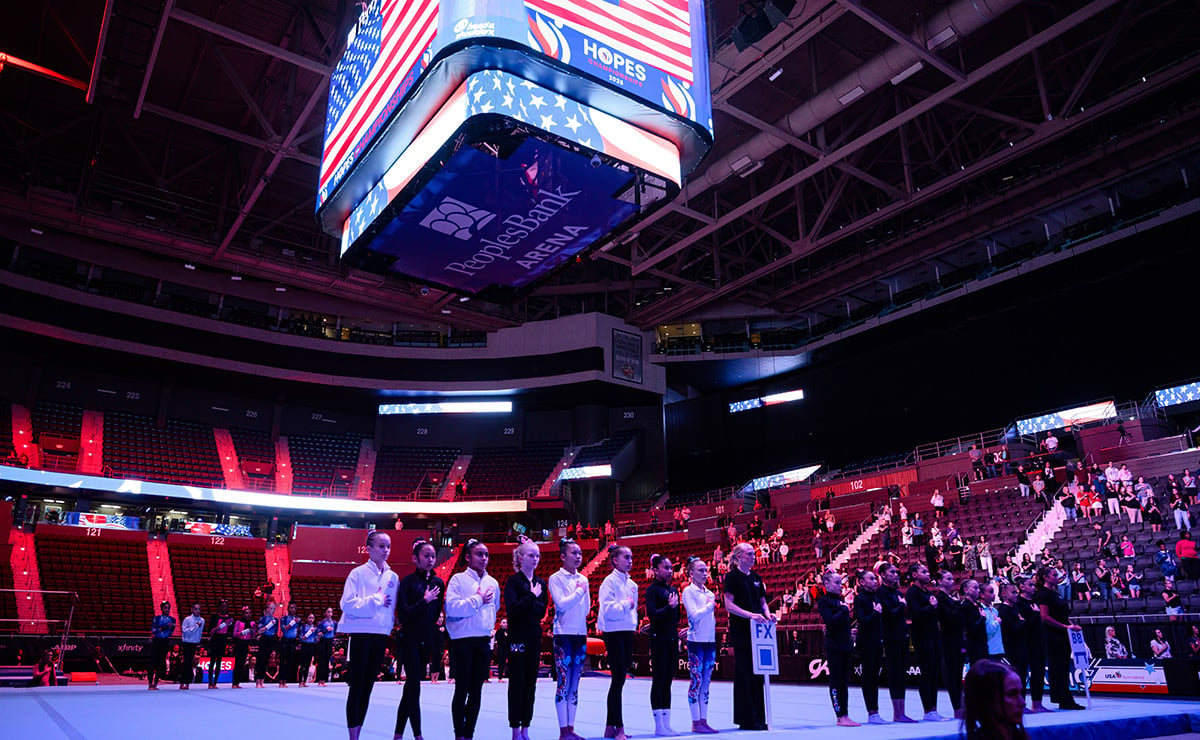
As the athletes prepare to compete, they are immersed in the details of a major competition: the lights, the podium and most of all, the feeling of being in a large arena laid out for premier gymnastics.
The first thing every Hopes gymnast learns about the arena is that it’s chilly, especially before athletes start to warm-up. Hands disappear under warm-up sleeves. Gymnasts wrap fuzzy blankets (an unofficial staple of the Hopes Championships) over their shoulders and tuck them beneath crossed legs. The young gymnasts move around the arena in clusters of matching warmups that make each gym instantly recognizable. Before the personal brands, signature leotards, and carefully curated competition personas of the senior elite, there are young Hopes athletes in matching leotards, competing as much as a group as individuals. One gym sits together, then another, until the floor below the apparatus becomes a patchwork of team colors.
The magic of mingling
Most of the coverage surrounding the Hopes Championships is focused on the scores, the standings, and who eventually comes out on top on the competition floor. However, one of the defining moments of the event comes before competition even begins.
Because the Hopes Championships starts directly after senior podium training for U.S. Classic, the young athletes begin to enter the arena just as the last of the senior elites are finishing up.
Just minutes earlier, some of the best gymnasts in the world had been training under these same lights. Now, those Olympians, World Championship athletes, and national champions stop to pose for pictures. Jade Carey smiles beside a wide-eyed ten-year-old Hopes athlete. It is a quiet reminder of what this competition represents.
The younger gymnasts, seated cross legged on the floor, watch the senior elites with just as much interest as they had watched their gymnastics only moments before.
Being able to do the skills is one thing, but just as important to elite success is developing presence — the ability to grab the attention of a crowd and draw in an audience. Even when they aren’t doing gymnastics, the senior elites command a captive audience among the Hopes athletes.
Not every young gymnast sitting on the arena floor in Hartford will go on to become a household name. Some will choose not to continue to elite at all. But many senior elites, NCAA stars, and even some Olympians once occupied a place like this: waiting under blinding lights in an arena that felt too cold, surrounded by teammates, wrapped in blankets, and equal parts excited and nervous about what comes next.
Leave A Comment
You must be logged in to post a comment.