
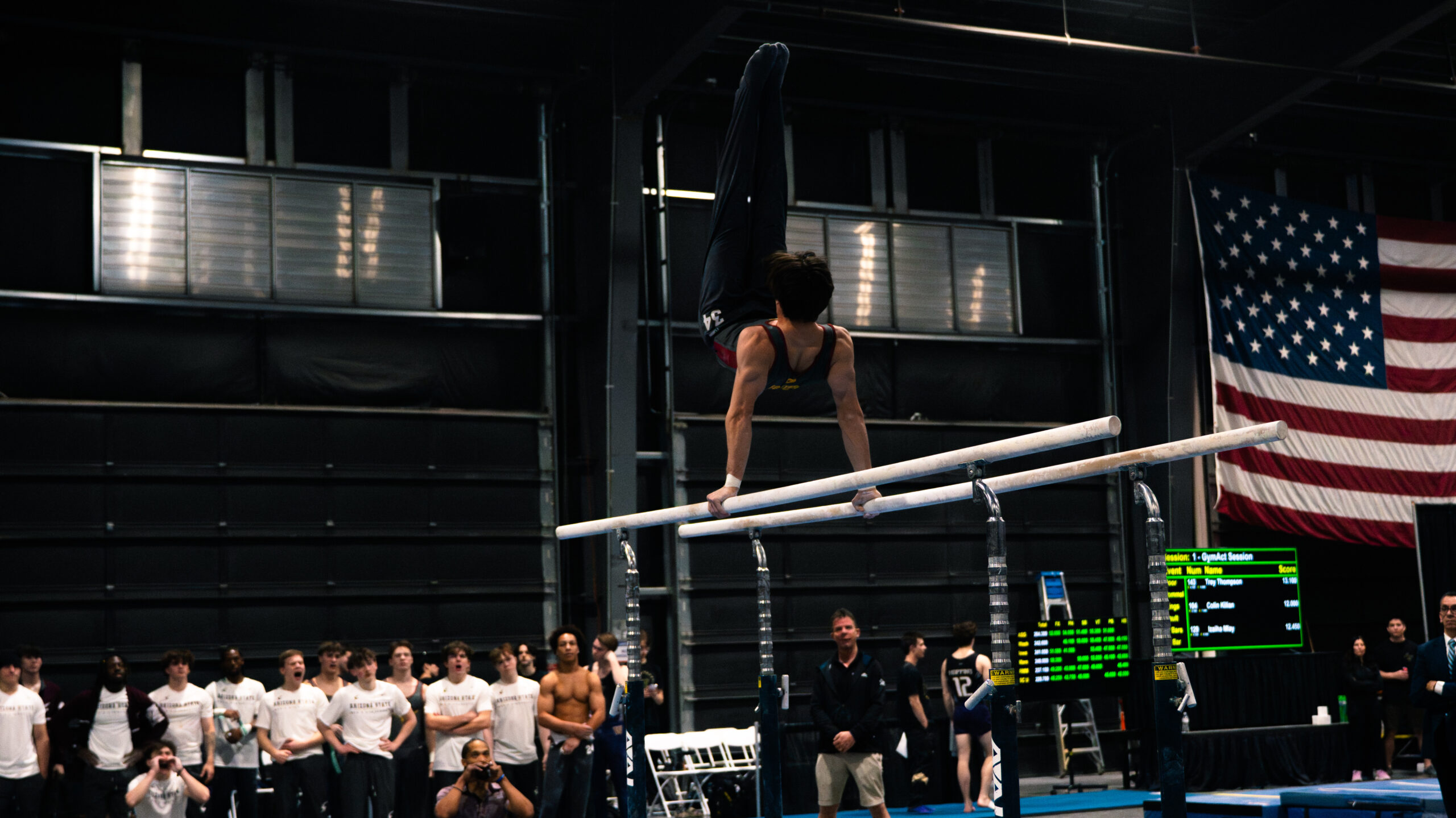
When Arizona State cut its NCAA men’s gymnastics program in 1993, it could have been the end.
Instead, it became the start of something else.
Head coach Scott Barclay stayed. Without university funding, scholarships, or the structure that once supported the program, the focus shifted. It was no longer about competing within the NCAA. It was about keeping the opportunity alive.
“I never wanted to be a coach,” Barclay said. “But it was the only way I could stay in the gym… and it turned into something I loved.”
That meant doing whatever it took.
What began as a fight to keep one program alive eventually became something more.
Across the country, programs have faced similar realities, including the University of Minnesota, where head coach Mike Burns led one of the nation’s top programs, producing All-Americans and Olympians. In 2020, that program was cut, a decision that shook athletes, alumni, and the broader gymnastics community.
“It was a punch to the gut,” Burns said.
Now serving as president of GymACT, Burns has seen firsthand what happens when opportunities disappear, and what it takes to rebuild them.
For him, GymACT fills a gap that has only continued to grow.
“We kind of filled a void,” Burns said. “It wasn’t an NCAA team… it was a high-level program looking for a place.”
Today, GymACT stands as a national system of programs built outside the NCAA model, but driven by the same level of commitment. It is not defined by what it lacks, but by what it requires.
In GymACT, sustaining the sport is part of competing in it.
What Is GymACT?
GymACT, the Gymnastics Association of College Teams, did not appear overnight. It grew out of necessity, shaped by programs that refused to disappear and athletes who were not ready to be done.
As more NCAA teams were cut or left without a competitive home, what once felt like isolated efforts began to take form as something more structured. GymACT became that structure, a national organization made up of 16 programs across the country, each operating with a shared goal but often very different models.
Some teams remain affiliated with universities, while others operate independently. Many function as nonprofits, supported by boards of directors, alumni networks, and community partnerships.
Unlike traditional NCAA programs, there are no guaranteed scholarships or institutional funding. Instead, programs are responsible for building and sustaining themselves.
That responsibility extends far beyond training.
Behind the scenes, teams manage travel, organize competitions, and generate the funding needed to compete. In many cases, athletes are part of that process, balancing their training with responsibilities that help keep their programs running.
For Scott Barclay, that reality has been part of the model from the beginning.
“We’ve got two full teams that we fly around the country,” Barclay said. “And we do very well fundraising.”
That effort often comes with trade-offs.
“It’s going to take away from a workout today,” Barclay said. “That’s okay… it’s going to give us money so we can get to nationals.”
For Mike Burns, building a program requires structure that goes beyond competition.
“You’ve got to have a nonprofit organization… a board of directors,” Burns said. “What’s your fundraising approach? What’s your budget?”
Programs are expected to manage every part of their operation, from finances to long-term planning, often without the backing of a university.
That structure also requires leadership at every level.
“You’ve got to have leaders on the team,” said Scott Barclay. “You can’t do it all yourself.”
In a system where athletes take on responsibilities beyond training, that leadership becomes essential. Programs rely on athletes not just to compete, but to help organize, communicate, and sustain what they are building.
That added responsibility does not take away from what happens in competition.
Athlete Experience
Despite how it operates, the level of gymnastics does not change.
GymACT is not recreational, and it is not a step down from the NCAA. Many of the same expectations apply, from training volume to competitive standards. Athletes are still performing at a high level, still pushing for consistency, and still working toward national titles.
“Guys mature from 18 to 24,” said Barclay. “You give them time, and they get there.”
Athletes like Jackson Harrison, Michigan’s Charlie Larson, and Penn State’s Kellen Ryan have used GymACT to continue training and competing at a high level, eventually moving into NCAA programs or pursuing Elite goals. What might have been the end of their careers instead became a path forward.
For Burns, that progression is not accidental. It is built into how these programs operate.
“It’s kind of like a minor league baseball team,” Burns said. “You’re developing the athletes to get to that next level.”
In many cases, GymACT becomes the space where athletes grow into their peak years. Without the pressure of immediate results or strict roster limits, gymnasts are given time to develop physically and refine their skills—something that is not always possible within the NCAA system.
Athletes who may have been overlooked out of high school are able to continue training, improve, and reenter the conversation at a higher level, while others remain competitive as they pursue Elite goals or extend their careers within the sport.
For some, it leads back to the NCAA. For others, it becomes the highest level they will compete.
Either way, the standard remains.
GymACT does not lower expectations. It expands who gets the chance to meet them.
For William Pearce, a coach and athlete with the Bay Area Bandits, that expectation is clear.
“It gives guys a chance to keep going when they might not have had one otherwise,” Pearce said.
In his dual role, Pearce has seen how that opportunity translates into performance. The athletes he works with are not just continuing for the sake of it, they are training with the same goals, the same pressure, and the same level of commitment.
“It’s different because you feel like you’re actually part of building something,” he added.
What Comes Next
Men’s collegiate gymnastics has spent years shrinking. Programs have been cut, opportunities have narrowed, and for many athletes, the path forward has become less clear. For some, it has raised a larger question about where the sport goes next.
GymACT does not answer that question all at once, but it does offer a direction.
It is not built on university funding or institutional support, but on the people willing to sustain it, coaches, athletes, and alumni who continue to invest in its growth. As more programs begin to take shape, that model is expanding, creating opportunities in places where they did not previously exist.
For Burns, the future of GymACT is tied directly to that growth.
“I see it continuing to grow,” he said. “We’ve got programs that are putting their structures together.”
For Barclay, the focus is on longevity.
“My goal now is to set up a program that will endure,” he said. “And to help GymACT… because it doesn’t matter if we’ve got a team if we don’t have a place to compete.”
Together, those perspectives reflect something deeper.
GymACT is not just a response to programs being cut. It is a reflection of a community that has refused to let the sport fade quietly.
“You’ve got to find passionate people that are willing to go above and beyond,” Burns said.
For Pearce, that mindset is what makes GymACT possible.
“You’re not just showing up and being part of a team,” he said. “You’re part of something that’s still growing.”
It speaks to what men’s gymnastics has always been.
That sense of investment, from athletes still competing to coaches building programs from the ground up, continues to shape what the sport looks like now.
GymACT is still evolving. Its structure is still being refined, and its reach is still expanding. What began as a way to keep individual programs alive has grown into something larger.
In a sport where opportunities have become increasingly limited, GymACT is creating new ones—not by replacing what existed before, but by building something that reflects the people who continue to fight for it.
Sarahy Mora Rincon is a Communications and Media Arts & Design double major at James Madison University. The Richmond, Virginia native serves as president of JMU Club Gymnastics, where she helps lead the team and support its events, outreach, and involvement in the collegiate club gymnastics community.
Photos by Arizona Men’s Gymnastics and Minnesota Men’s Gymnastics



Leave A Comment
You must be logged in to post a comment.