
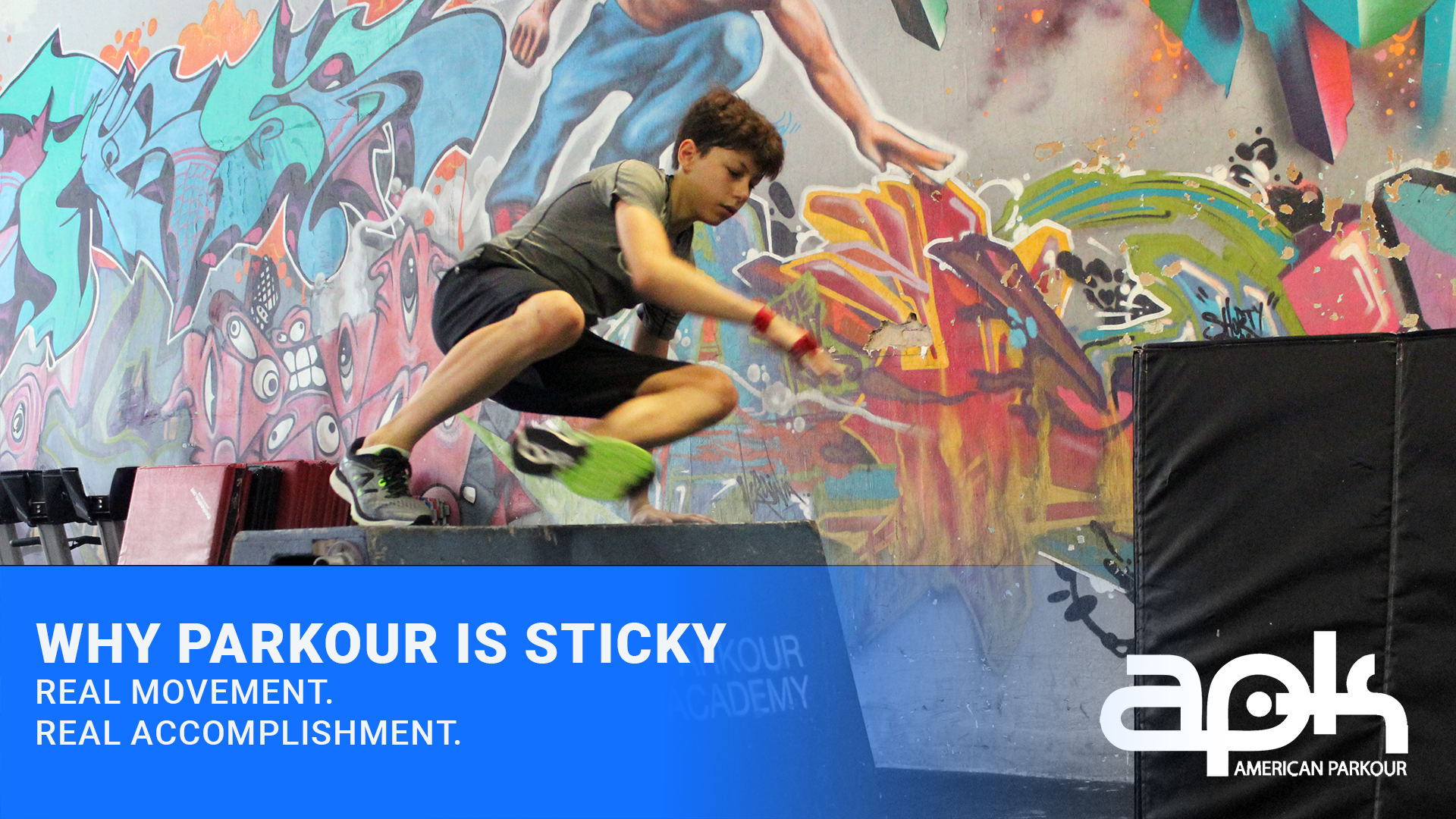
Flow, Challenge, and Real Accomplishment
Surely you’ve noticed that kids can stay locked into a video game for hours. That’s not accidental — game studios spend billions refining feedback loops, difficulty curves, and player rewards to create what researchers call sticky engagement[1].
Here’s the thing: Parkour already does this — and it’s real. When taught with the APK Method, parkour naturally delivers that same psychological state of flow: a sense of full absorption where time disappears and challenge feels both exciting and achievable.
Psychologist Mihaly Csikszentmihalyi defines flow as a state reached when the difficulty of a task is balanced perfectly with a person’s current ability — hard enough to be engaging, but not so hard it causes frustration[2].
The APK Method places students in that optimal challenge zone by offering self-scaled progressions, real-world tasks with instant feedback, and a culture that encourages “trying again” without fear. Every success is earned, visible, and meaningful.
Research shows that when students get to choose their level of challenge — and succeed — engagement skyrockets. It’s not just fun, it’s real-world accomplishment. That’s the kind of experience that creates lasting connection to movement and builds confidence from the inside out[3].
Bottom line: Parkour makes physical education sticky — because when students feel successful, they keep coming back.
Leave A Comment
You must be logged in to post a comment.